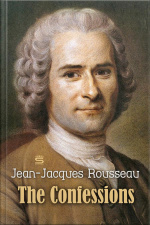
The Confessions is an autobiographical work of Jean-Jacques Rousseau which initiated modern autobiography. Covering the first fifty-three years of Rousseau's life the book...

Sophist
The Sophist is a Platonic dialogue from the philosopher's late period, most likely written in 360 BC. Its main theme is to identify what a sophist is and how a sophist differs...
The Essays
"The Essays" of Michel de Montaigne are contained in three books and 107 chapters of varying length. Montaigne's stated design in writing, publishing and revising...
Crito
"Crito" is a dialogue by the ancient Greek philosopher Plato.Plato (424/423 – 348/347 BC) was a philosopher in Classical Greece and the founder of the Academy in...
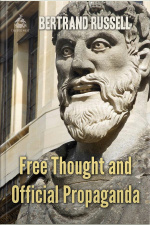
Free Thought And Official Propaganda
Moncure Conway, in whose honour we are assembled to-day, devoted his life to two great objects: freedom of thought and freedom of the individual. In regard to both these objects,...
Of A Happy Life
"On the Happy Life" is a dialogue written by Seneca the Younger around the year 58 AD. It was intended for his older brother Gallio, to whom Seneca also dedicated...

The Joyful Wisdom
"The Joyful Wisdom," written just before "Zarathustra," is rightly judged to be one of Nietzsche's best books. Here the essentially grave and masculine face of the...
On The Heavens
On the Heavens is Aristotle's chief cosmological treatise: written in 350 BC it contains his astronomical theory and his ideas on the concrete workings of the terrestrial...
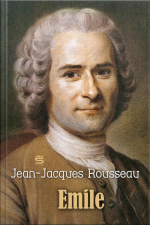
Emile
Emile is a treatise on the nature of education and on the nature of man written by Jean-Jacques Rousseau, who considered it to be the best and most important of all his writings....
The Ethics: Ethica Ordine Geometrico Demonstrata
"Ethics, Demonstrated in Geometrical Order (Latin: Ethica, ordine geometrico demonstrata), usually known as "The Ethics", is a philosophical treatise written by...