Sinopsis
Brilliant solutions to the worlds problems. We meet people with ideas to make the world a better place and investigate whether they work.
Episodios
-
![Does Universal Basic Income Work?]()
Does Universal Basic Income Work?
08/08/2017 Duración: 23minAround the world, governments and researchers are experimenting with the introduction of universal basic income. From Finland and Spain to India, the idea of giving every citizen – whether working or not – a set amount of money per month is gaining momentum. It’s claimed to be a fairer and more efficient way of running a welfare system, but we’re only just starting to understand what actually happens when you introduce a basic income for everyone. We look at the evidence and try to establish whether it is an idea whose time has come. Presenter: Mukul Devichand Producer: Jo MathysImage: An Indian man counts currency / Credit: Sajjad Hussain / AFP / Getty Images
-
![The Teachable Moment]()
The Teachable Moment
01/08/2017 Duración: 23minDarius has been shot three separate occasions, but the third time was the last. He was met at his bedside by a stranger, who changed his life forever.Victims of violence are, far more likely to be shot, stabbed or violently assaulted a second or third time - as the perpetrators of violence try to silence the victim.In San Francisco, where Darius lived, specially trained case managers visit victims of violence at their bedsides in hospital and work with them to break that cycle of violence, offering practical advice and specialist services to the patients.They claim that speaking with victims of violence immediately after an attack, when they are experiencing a 'teachable moment' they have a far greater chance of changing the patient's life forever.Reporter Sam Judah meets Darius at the site of his third and final shooting, tracing his journey to the hospital, and his meeting with the youth worker who helped him turn his life around.Image: Darius / Credit: BBC
-
![Mexicos Cartoon Therapists]()
Mexico's Cartoon Therapists
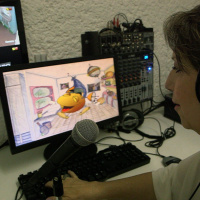
25/07/2017 Duración: 22minHow do you get children who're victims of emotional abuse or physical harm to open up about what's happened to them? In Mexico a psychologist, Julia Borbolla, encourages them to have a one-to-one chat with a cartoon alien that appears on a video screen in a room near her office. What the children don't realise is Julia hears every word of their conversation with the animated creature because she's secretly controlling it from the room next door.She says children are more likely to reveal sensitive information to the cartoon alien than if they were face-to-face with a real person. World Hacks travels to Mexico City to assess whether the tool works and to meet people who're now operating it in public hospitals, women's shelters and within the country's judicial system.(Photo: Psychologist Julia Borbolla Credit: BBC)
-
![Cutting Cow Farts to Combat Climate Change]()
Cutting Cow Farts to Combat Climate Change
18/07/2017 Duración: 19minMethane emissions from the burps and farts of livestock accounts for around 15% of global greenhouse gas emissions. But the trick to reducing this could lie with some of Kenya’s smallholder farmers. By using very simple techniques to transform the way they manage their soil and animals, dairy farmers are helping their cows emit less methane per litre of milk they produce. And it’s all being paid for by big polluters, in what could become a major form of carbon offsetting. Is this a new frontier in the fight against climate change? World Hacks has been to rural Kenya to find out. Presenter: Vincent Ni Reporter: Harriet Noble
-
![Thailand’s Disease Detectives]()
Thailand’s Disease Detectives
11/07/2017 Duración: 22minWorld Hacks goes to Thailand to meet an army of volunteers on the front line in the fight against dangerous diseases, like Ebola and bird flu.Nearly 100 years ago Spanish Flu infected a third of the world’s population and killed about 50 million people. With increased international travel, growing populations and environmental damage, experts warn that viruses now have the potential to spread faster, and we could be on course for another pandemic, with devastating consequences. Pandemics often originate in places where animals and people live in close contact, making it easy for animal diseases to spill over into humans, and where health systems may not be able to pick up on threats and respond quickly. In rural Thailand, 75% of people keep animals in their back gardens, making it hard to keep track of new outbreaks. In 2004, a strain of bird flu swept through the country, as well as Vietnam, Cambodia and Indonesia, infecting more than 125 people and killing about half of them. Vets at Chiang Mai University
-
![Can We Supercharge School?]()
Can We Supercharge School?
04/07/2017 Duración: 23minA new school in San Francisco thinks it can massively accelerate the speed at which children can learn, using clever technology and smart algorithms to offer each child a bespoke education. AltSchool believes it can achieve results that were only previously possible by giving individual children their own personal tutor. The firm currently runs eight small ‘lab schools’ dotted around the country, all run from their California headquarters. But they have huge plans for expansion, and hope to sell their software to every school in the country. Sam Judah meets the pupils at one of the schools, and the CEO at AltSchool’s nerve centre, to find out what’s behind the company’s big idea.Presenter: Mai Noman Producer: Sam JudahImage: A pupil at AltSchool / Credit: BBC
-
![Turning Fatbergs into Fuel]()
Turning Fatbergs into Fuel
27/06/2017 Duración: 23minLurking in the sewers beneath the streets there are giant blobs of congealed cooking fat known as “fatbergs”. Now one company has come up with a clever way of making money out of them. Their efforts may one day change perceptions of fatbergs – turning the lumps of putrid waste into a valuable commodity.Presenter: Tom Colls Reporter: Nick Holland(Image: A fatberg, Credit: Thames Water)
-
![Thailand’s Condom King]()
Thailand’s Condom King
20/06/2017 Duración: 22minThailand in the 1960s was on the verge of a population disaster. Thai women were having seven children on average, and the government was struggling to raise living conditions. Mechai Viravaidya, a young economist who moonlighted as a soap actor, newspaper columnist and teacher, made it his mission to get family planning into every village in Thailand - he wanted to make condoms as easily accessible as vegetables. Mechai realised he could use humour to break down Thai reservations about contraception, launching condom blowing competitions and condom beauty pageants. His efforts were so successful, condoms became known as “Mechais” in Thai, and he was nicknamed “The Condom King” or “Mr Condom”. When the HIV/Aids crisis threatened to engulf Thailand in early 1990s, Mechai, now a government minister, launched a mass media campaign promoting condom use and made condoms available everywhere, from massage parlours to bus stops. It is estimated these preventative measures saved 7.7 million lives. We find out what le
-
![How To Be A Better Mum In Jail]()
How To Be A Better Mum In Jail
13/06/2017 Duración: 23minThere are more than 200,000 women in US prisons and jails and it is estimated that 6% to 10% are pregnant. One project in Minnesota is trying to use these pregnancies to change the lives of the women, and their children, for the better. We go to jail with the Minnesota Prison Doula Project to see how it works.Presenter: Mukul Devichand Reporter: Sahar Zand Producer: William Kremer
-
![Would You Rent Your Clothes?]()
Would You Rent Your Clothes?
06/06/2017 Duración: 23minGlobally, only around 20% of clothes are re-used or recycled. The majority go to landfill or are incinerated. In the USA alone, the amount of clothes being thrown away has doubled in the last two decades. In World Hacks this week we meet the Scandinavian entrepreneurs trying to change this. Could a solution to this waste be to give people the option of renting clothes, so they don’t hoard things they rarely wear? Or how about clothes you can throw away guilt free, because they are fully compostable? Presenter: Mukul Devichand Reporter: Dougal ShawImage: Man wearing boxer shorts / Credit: Houdini
-
![The Stickers that Save Lives]()
The Stickers that Save Lives
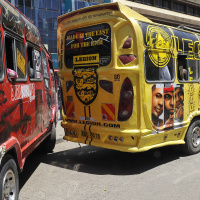
30/05/2017 Duración: 26minRoad accidents are the single largest cause of death amongst young people around the world. But a project in Kenya is making impressive progress in tackling the issue. It has deployed a small and very simple weapon, which has been proven to cut bus accidents by at least a quarter – a sticker. Also on the programme, how they’re making recreation space in Chile, but without knocking down any buildings. Presenter: Tom Colls Producer: Harriet Noble [Image: Mutatu buses in Kenya. Copyright: Getty Images]
-
![Turning Plastic Trash into Cash]()
Turning Plastic Trash into Cash
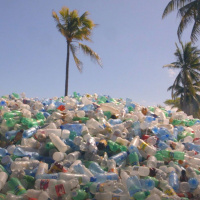
23/05/2017 Duración: 23minPicking up money - that’s what Haitian’s nicknamed a movement seeking to solve Haiti’s plastic waste problem and reduce poverty at the same time. It was started by a man who saw a glimmer of hope in the devastation wrought by the 2010 earthquake: plastic bottles were clogging the beaches and filling the oceans with rubbish. But what if you could clear up the trash, give Haitians employment, and reduce the reliance on “virgin” plastic, all at the same time? It’s a bold idea that aims to solve two of the World’s big problems – poverty and plastic in the ocean. And it all hinges on attaching social value to recycled plastic. So why aren’t more companies doing it?Presenter: Sahar Zand Reporter: Gemma Newby(Image: Plastic rubbish on beach in Haiti, Credit: BBC)
-
![Turning Goats into Water]()
Turning Goats into Water
16/05/2017 Duración: 24minFariel Salahuddin is not the type of person you’d expect to see wandering around rural Pakistan, especially with a herd of goats. She’s a successful energy consultant who has worked around the world. But when she returned to where she grew up, Pakistan, Fariel decided she wanted to work on smaller projects to try to make an immediate impact and provide solar energy to poor, rural communities. This was all very well, until she realised these places didn’t have water, let alone power. What they did have was goats. Fariel developed an innovative scheme to trade what the villagers have in plentiful supply for something they desperately needed: goats for water. But what was Fariel going to do with all her newly acquired goats? Presenter: Mukul Devichand Reporters: Secunder Kermani and Dougal Shaw Producer: Charlotte PritchardImage: Goats in rural Pakistan / Credit: BBC
-
![Saving Lives with Text Messages]()
Saving Lives with Text Messages
09/05/2017 Duración: 22minWhat do you do in a medical emergency when the equivalent of 999 or 911 simply doesn’t exist? After spending time in countries that lack public ambulance services, US paramedic Jason Friesen realised the problem wasn’t a lack of sophisticated ambulances, or the hi-tech medical equipment inside them, but the communication system necessary to get an injured person from A to B in time to save their life. In the Dominican Republic there are no public ambulances but now, in two rural areas, first responders respond to a medical emergency as fast as any ambulance service in the developed world. And all it takes is one smartphone, a handful of willing volunteers, and an Uber-like text system that crowdsources help when disaster strikes.And Dougal Shaw meets the man who is pioneering a way to use recycled plastic to make stronger, longer lasting roads.Presenter: Sahar Zand Reporters: Gemma Newby, Dougal Shaw.Image: First responders in the back of an ambulance / Credit: BBC
-
![Greener In Death]()
Greener In Death
02/05/2017 Duración: 23minThis is a story about what happens to your body after you die. In many countries, the current options are burial and cremation, but, both methods come with significant environmental impacts. We’re running out of space for burial in many places, and cremation carries the risk of toxins and greenhouse gases being released. For World Hacks, Sahar Zand travels to the US, where they’re using a new process to deal with the dead. It’s been called “green cremation,” “water cremation” or “resomation” and uses alkaline hydrolysis to mimic and accelerate the breakdown of tissue that would occur in burial. Those who invented the process say it’s an environmentally friendly way to address this fundamental moment in the human life-cycle, but does the evidence stack up?Reporter: Sahar Zand Presenter Mukul DevichandImage: A resomation machine / Caption: BBC
-
![Helping Disabled People With Sex]()
Helping Disabled People With Sex
28/04/2017 Duración: 23minHow do you fulfil your sexual needs if you have a disability? How do you masturbate if you have limited use of your hands? These are problems that most able-bodied people have probably never considered. But if you’re in this position it’s something you probably think about a lot. And it’s a problem which Vincent, the founder of a small NGO called Hand Angels, is trying to help with. His group matches volunteers with disabled people to provide a sexual service. Mukul Devichand and Alvaro Alvarez go to Taiwan to hear the remarkably frank stories of the volunteers and the receivers at the service. They open up a world of deep disappointment of those people who haven’t experienced sex or intimacy and an organisation that thinks it has the solution. But can any service ever fill this gap or is it just a shallow fix. Presenter: Mukul DevichandImage: Vincent – the founder of ‘Hand Angels’ / Credit: BBC
-
![The Data Donators]()
The Data Donators
18/04/2017 Duración: 23minThe Data Donators Meet Becky. She suffers from arthritis and is in constant pain. Like lots of people – patients and doctors alike – she has a hunch that bad weather could be exacerbating the problem.It’s a question that has been asked for at least 2000 years, but we have never had the tools or resources to answer it. That is, perhaps, until now. Dr Will Dixon has set up a mass participation study that takes advantage of smartphone technology. More than 13,000 people have downloaded an app that has provided his team with a massive set of data, and by combing through it he hopes to answer the question once and for all. It’s not the only project of its kind, either. Around the world more and more people are launching similar projects – asking thousands of volunteers to donate their data for the greater good.Presenter: Mukul Devichand Reporter: Nick HollandImage: Overlay of highlighted bones of woman at physiotherapist / Credit: Shutterstock
-
![Postmen Delivering Kindness to the Elderly]()
Postmen Delivering Kindness to the Elderly
11/04/2017 Duración: 18minOn the island of Jersey, postal workers don’t just deliver the mail. They also check up on elderly people during their routes. In a five minute chat, they check they’ve taken their medication and if there’s anything else they need. It’s popular with older people and their relatives, and the project has caught the attention of post offices - and health professionals - around the world. Could a chat on the doorstep help solve the social care crisis? We travel to Jersey to meet the man behind the idea, and join a postman on his round. Presenter: Tom Colls Producer: Elizabeth CassinImage: Jersey postman Ricky Le Quesne / Credit: BBC
-
![The Parent Hack For Cheaper Childcare]()
The Parent Hack For Cheaper Childcare
04/04/2017 Duración: 22minParents struggling with childcare costs in London are banding together to care for each other’s kids. They run a super-cheap nursery where mums and dads take on half of the childcare. It’s a throwback to the childcare movement of the 1970s but can it work in the modern age?Presented by Sahar Zand. Produced by William Kremer.Image: Drawing of a family / Credit: BBC
-
![Toilets in Haiti and Circular Runways]()
Toilets in Haiti and Circular Runways
25/03/2017 Duración: 23minThere are no sewers in Haiti. 26% of Haitians have access to a toilet, so a lot of the sewage ends up in the water supply. Currently, Haiti is battling the biggest cholera epidemic in recent history and thousands are dying. We travel there to meet a team of women who are trying to solve this massive problem. They have set up an NGO called Soil which delivers dry, compost toilets to peoples’ homes. Alternatives to water guzzling flushing toilets - which need infrastructure such as sewers - are drastically needed in many parts of the world. And there’s a bonus to this scheme too.Also on the programme, a radical suggestion for airports: build circular runways. Are the current straight ones really the best way to take off and land?Presenter: Sahar Zand Reporters: Gemma Newby & Dougal Shaw Producer: Charlotte PritchardImage: The women of Haiti who work for the NGO Soil / Credit: BBC